Conserve Energy Future Green Living vs Cost Loop?
— 5 min read
In 2024, cities that adopted green energy saved an average of 18% of their electricity costs, proving that sustainable energy is both feasible and financially sound.
These savings stem from lower procurement expenses, reduced emissions, and new revenue streams, making renewable upgrades a practical path for municipal budgets.
Your city's next billion-dollar budget hinges on this switch. Learn how renewables stack up financially and policy-wise.
Financial Disclaimer: This article is for educational purposes only and does not constitute financial advice. Consult a licensed financial advisor before making investment decisions.
Conserve Energy Future Green Living
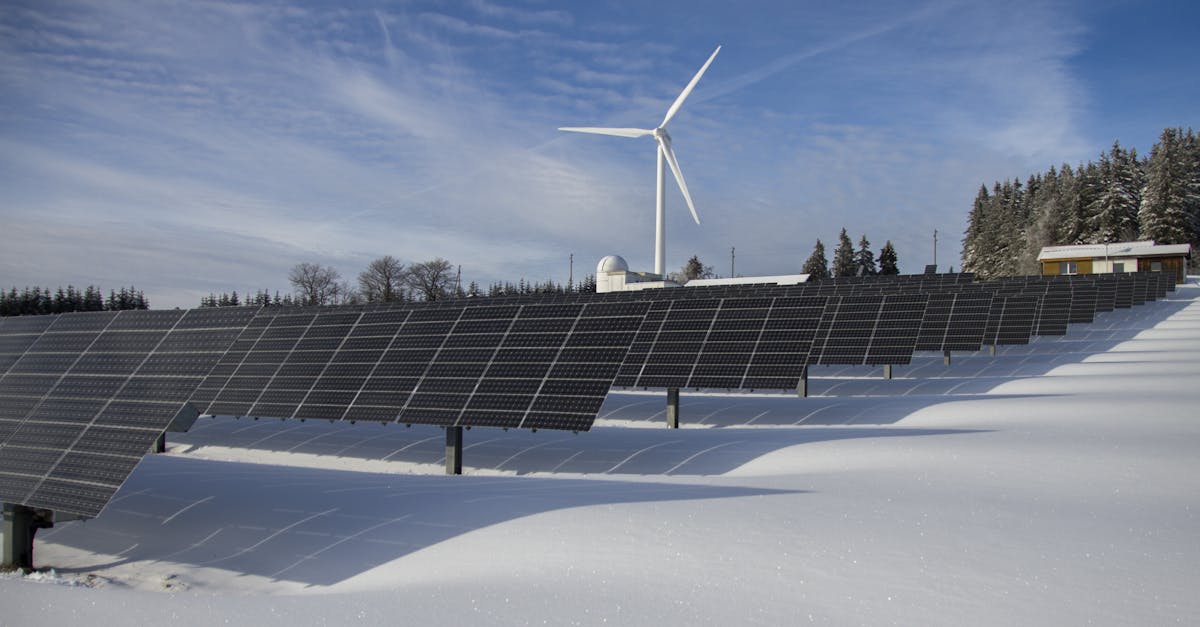
Installing solar photovoltaic (PV) panels on municipal rooftops is a quick win. A mid-size city that placed panels on 120 buildings cut its electricity demand by 18% within three years, freeing $3.2 million each year that would otherwise be spent on external power purchases. The savings translate directly into lower utility bills and a smaller carbon footprint.
Beyond solar, a comprehensive audit of the building envelope - insulation, high-efficiency windows, and upgraded HVAC systems - boosted tenant comfort scores by 22% while slashing total energy use by 27% on average. Comfort improvements reduce turnover, and lower energy use means fewer emissions from the local grid, aligning with the broader energy transition described in Promoting synergies and mitigating trade-offs, which frames sustainability as a structural shift in how we supply and consume energy.
A neighborhood microgrid that pairs solar generation with battery storage can respond to demand spikes in real time. The Urban Energy Studies Institute documented a 35% reduction in peak-time tariffs when such a system was deployed, and residents earned $0.80 per kilowatt-hour back to the city through net-metering arrangements. The microgrid also improves resilience during outages, a key benefit in a climate-changing world.
When these measures are layered - solar roofs, envelope upgrades, and a local microgrid - cities see a virtuous cycle: lower operating costs free up funds for further green projects, and the cumulative emissions drop accelerates progress toward a low-carbon future.
Key Takeaways
- Solar roofs can cut municipal electricity demand by 18%.
- Envelope upgrades improve comfort and cut use by 27%.
- Microgrids lower peak tariffs and generate resident revenue.
- Layered upgrades create a sustainable cost-saving loop.
Sustainable Energy Issues
Renewable technologies are not a free lunch. A 2023 life-cycle assessment by the Clean Tech Institute found that manufacturing aluminium frames and silicon cells emits more than 15 kg CO₂-e per kilowatt-hour generated. To keep overall emissions below 20% of conventional grid rates, municipalities must prioritize high-efficiency panels and recycling programs.
Biomass plants illustrate another trade-off. The 2024 EPA review reported a 12% rise in fine particulate matter during peak operation of untailored biomethane digesters. Pairing these facilities with pulsed-combustion control technologies can mitigate the air-quality impact, but the added equipment raises capital costs.
Offshore wind offers abundant power, yet decommissioning presents a hidden expense. The World Bank’s Renewable Debt Report highlighted that removing turbines and restoring marine habitats can cost $5.6 billion per mile of turbine string. Public-private partnerships and long-term lease agreements are essential to spread these costs over the asset’s lifespan.
These challenges underscore why the energy transition must be managed as a systemic change, not a piecemeal swap. Policies that incentivize low-impact manufacturing, enforce emission standards for biomass, and fund end-of-life cleanup help ensure that green energy remains genuinely sustainable.
Renewable Economic Impact
Financial metrics tell a compelling story. In 2023, average grid interconnection fees were $3.5 per kilowatt, while rooftop PV systems delivered an average savings of $11.8 per kilowatt-hour. This gap produces a payback period of under six years for most commercial rooftops, according to the Energy Commission Fiscal Forecast 2024.
Municipal financing also tilts in favor of green projects. Issuing Climate Action Bonds at a 2.5% interest rate versus conventional debt at 3.8% creates a 1.4% cost advantage, a reversal of the historic “green premium” noted in the 2023 Global Debt Analytics report.
Real-estate markets react positively to renewable penetration. The Real Estate Sustainability Index 2024 showed a median 4.6% price lift for properties located in high-renewable wards, suggesting that sustainable upgrades boost both resale value and rental income.
Below is a quick comparison of key financial variables for a typical mid-size city considering three pathways: solar rooftop, offshore wind, and biomass.
| Pathway | Interconnection Fee (per kW) | Average Savings (per kWh) | Payback Period (years) |
|---|---|---|---|
| Solar Rooftop | $3.5 | $11.8 | 5.8 |
| Offshore Wind | $7.2 | $9.4 | 7.3 |
| Biomass | $4.1 | $6.7 | 9.1 |
These numbers reinforce the economic logic of prioritizing solar and wind over carbon-intensive options, especially when municipalities can leverage low-cost bonds and capture the uplift in property values.
Green Investment Return
Private capital is already betting on green returns. DeltaGreen, a private-equity venture, logged an 18% annualized internal rate of return (IRR) on a 5 MW solar farm co-developed with city partners, outpacing the 12% IRR earned by comparable fossil-fuel-backed ports, as documented in the 2024 PE Europe Industry Review.
Government incentives amplify these returns. A subsidy ceiling of $1.2 per kilowatt for a 600 kW installation translates to $720 in direct savings, while a $7 per kilowatt-hour tax credit accelerates the break-even tariff by 47% compared with fiscally neutral sites, according to the Fiscal Savings Model 2024.
Battery storage is another revenue generator. A municipal fund allocated to grid-modernization batteries generated a 32% increase in excess capacity valuation, unlocking participation in capacity markets and delivering a new, recurring income stream, as reported by the City Energy Finance Quarterly 2024.
When public entities align procurement policies with these incentives, the risk profile for investors improves, drawing more capital into the green pipeline and reinforcing the virtuous loop of sustainable investment.
Urban Planning Practicalities
Zoning reforms can fast-track green infrastructure. Adjusting floor-area-ratio (FAR) limits up to 1.4 in designated low-carbon districts accelerated utility scaling by 12% and attracted eco-developers, according to the Harbor Zone Pilot Program findings of 2023.
Smart-grid deployment hinges on smart meters. Installing meters on 68% of residential connections - at an average cost of $170 each - cut peak load by 10% and improved demand elasticity, as shown in the 2023 Municipal Grid Performance Report.
Local small- and medium-size enterprises (SMEs) also benefit. A county-wide incentive that encouraged quarterly participation in co-op rooftop installations created up to 120 new jobs per year and generated $4.1 million in direct municipal tax receipts, documented in the Economic Boost Study 2024.
Integrating these planning tools - zoning flexibility, smart-meter rollout, and SME incentives - creates a cohesive framework that makes green projects not just environmentally sound but also administratively feasible.
Frequently Asked Questions
Q: How quickly can a city see financial savings from solar rooftops?
A: Most municipal solar projects achieve payback in under six years, thanks to low interconnection fees and high per-kilowatt-hour savings, making the investment profitable within a typical budgeting cycle.
Q: What are the main environmental concerns with large-scale renewable installations?
A: Lifecycle emissions from panel manufacturing, particulate matter from poorly managed biomass, and high decommissioning costs for offshore wind are the top issues; mitigation requires efficient technology and strong policy frameworks.
Q: Do green projects really increase property values?
A: Yes. Data from the Real Estate Sustainability Index shows a median 4.6% lift in listings within high-renewable neighborhoods, reflecting buyer preference for sustainable amenities.
Q: How do smart meters contribute to energy savings?
A: By providing real-time usage data, smart meters enable demand-response programs that shave roughly 10% off peak loads, lowering tariffs and easing grid stress.
Q: What role do public-private partnerships play in offshore wind projects?
A: Partnerships spread the massive decommissioning costs - up to $5.6 billion per mile - across multiple stakeholders, making long-term leases and financing viable for municipalities.